When can a mother return to work? How are the tax benefits that support families’ financial planning changing?

These are not merely legal questions – they shape everyday decisions and are a real dilemma for many parents. Several important changes have recently been made to personal income tax benefits as well, which are worth knowing, especially for those who would like to return to work after having a child.
In this post we briefly and clearly summarise the key points on the legal framework for returning to work and the latest rules on claiming tax benefits.
Working alongside CSED (infant care benefit)
Act LXXXIII of 1997 on the benefits of compulsory health insurance sets out the rules on working while receiving CSED. The government amended this act with effect from 1 July 2025, relaxing the legal framework for mothers working alongside CSED.
The most important change is that from the 90th day after the child’s birth the mother may again pursue gainful activity. This can be employment, sole proprietorship or a contract for services.

For the days worked, the CSED amount is reduced to 70%, while the full 100% CSED remains due for the other days. For example, if the mother works two days a week, she is entitled to 70% CSED for those two days and 100% for the rest.
Although the Labour Code does not require it, it is advisable to give written notice of the return to work at least 30 days in advance. This helps avoid misunderstandings and protects the employee’s rights.
Since the legislation was published, we have received many enquiries about working alongside CSED, which shows that more and more mothers are interested in this option. The change is beneficial in several respects – for families and for employers alike.
For families, the extra income from working can be a significant help in covering everyday expenses, while the mother can stay professionally active. She does not drop out of the world of work for years, does not lose her skills, and does not have to fear that returning will be difficult.
For employers, the advantage is that they do not have to arrange long-term cover, as the original employee can perform her duties partly or even fully.
Personal income tax exemption
With the entry into force of Act XVI of 2025 on the tax benefit for infant care benefit, child care benefit and adoption benefit, there is an important change in the payroll treatment of CSED and GYED.
CSED, GYED (child care benefit) and ÖFD (adoption benefit) paid after 30 June 2025 are fully exempt from personal income tax, regardless of the period the benefit relates to. If someone receives several benefits, for example GYED for two children, each benefit is fully tax-exempt.
The exemption applies automatically, so there is no need to apply for it separately, and no declaration or other form needs to be completed.
The CSED rate was earlier raised to 100%, which means the full amount of the benefit has become tax-exempt. Since only personal income tax used to be deducted from it, the change effectively means a higher net amount paid out. If the mother would also claim the family tax allowance alongside CSED, it is worth considering waiving it and transferring the allowance to the father. The allowance can then be applied against the father’s salary, which may be financially more favourable. Of course, if the mother takes up work during the CSED period, it is advisable to review the sharing and application of the family allowance again.
In the case of GYED, the 10% pension contribution continues to be deducted, which makes it possible to claim the family contribution allowance through this benefit as well.
Change in the family tax allowance
Act CXVII of 1995 on personal income tax contains the changes to the family tax allowance.
From 1 July 2025 the amount of the family tax allowance also increases:
- For one dependant: gross HUF 100,000
- For two dependants: gross HUF 200,000 per child
- For three or more dependants: gross HUF 330,000 per child
- For a child with a long-term illness: gross HUF 100,000 per child
For children in alternating care, the allowance can still be shared 50–50 between the two parents.
If employees submitted their declaration before 1 July 2025 with an amount stated in it, they must complete a new declaration claiming the higher amount. Without it, the old, lower amount must be applied in payroll.
Upcoming benefits
Benefit for mothers of three (Act XV of 2025 on the benefit for mothers raising three children)
This benefit takes effect on 1 October 2025. It can be claimed by mothers who raise three children and are currently entitled to family allowance, or who were entitled to it for at least 12 years earlier but no longer receive it.
There is no age limit, so even pensioners can use this option, provided they have taxable income.
The benefit provides full personal income tax exemption, regardless of the amount.
Benefit for mothers of two
The tax exemption for mothers of two children is being introduced in stages from January 2026, according to the following schedule:
- from 1 January 2026: those under 40
- from 1 January 2027: those aged 40–50
- from 1 January 2028: those aged 50–60
- from 1 January 2029: mothers over 60
For these two new benefits, the tax authority (NAV) has not yet published the forms needed to claim them, but they will be made available in time.
Applying the tax benefits
Act CXVII of 1995 on personal income tax sets the order in which tax benefits are applied. This means that if someone is eligible for several benefits, they are applied in the order below.
Order in force from 1 July 2025
- benefit for mothers raising four or more children,
- benefit for infant care benefit, child care benefit and adoption benefit,
- benefit for young people under 25,
- benefit for mothers under 30,
- personal allowance,
- first-marriage allowance,
- family allowance
Order in force from 1 October 2025
- benefit for mothers raising four or more children or the benefit for mothers raising three children
- benefit for infant care benefit, child care benefit and adoption benefit,
- benefit for young people under 25,
- benefit for mothers under 30,
- personal allowance,
- first-marriage allowance,
- family allowance
Order in force from 1 January 2026
- benefit for mothers under 30,
- benefit for mothers raising four or more children, the benefit for mothers raising three children or the benefit for mothers raising two children,
- benefit for infant care benefit, child care benefit and adoption benefit,
- benefit for young people under 25,
- personal allowance,
- first-marriage allowance,
- family allowance
It is worth noting that if the mother is entitled to another tax-base-reducing benefit in addition to the family allowance, it may be advisable to transfer the family allowance to the father so that together they can maximise the benefits they can claim.
These changes aim to give mothers greater financial security and to spare them the worry of being excluded from the labour market for a long time. Of course, none of this means that anyone is obliged to return to work as soon as possible – the emphasis is on the opportunity. Every family is free to consider when and in what form the mother’s return to work is most beneficial.
More posts
Codebase among the BSE50 2026 companies
The Budapest Stock Exchange has published BSE50 2026, its book on the success stories of fifty Hungarian companies. Codebase Kft., the company behind Codebase Payroll Services, is one of them. We are very proud of this recognition from the market.
Pay planning for 2027: what should employers focus on now?
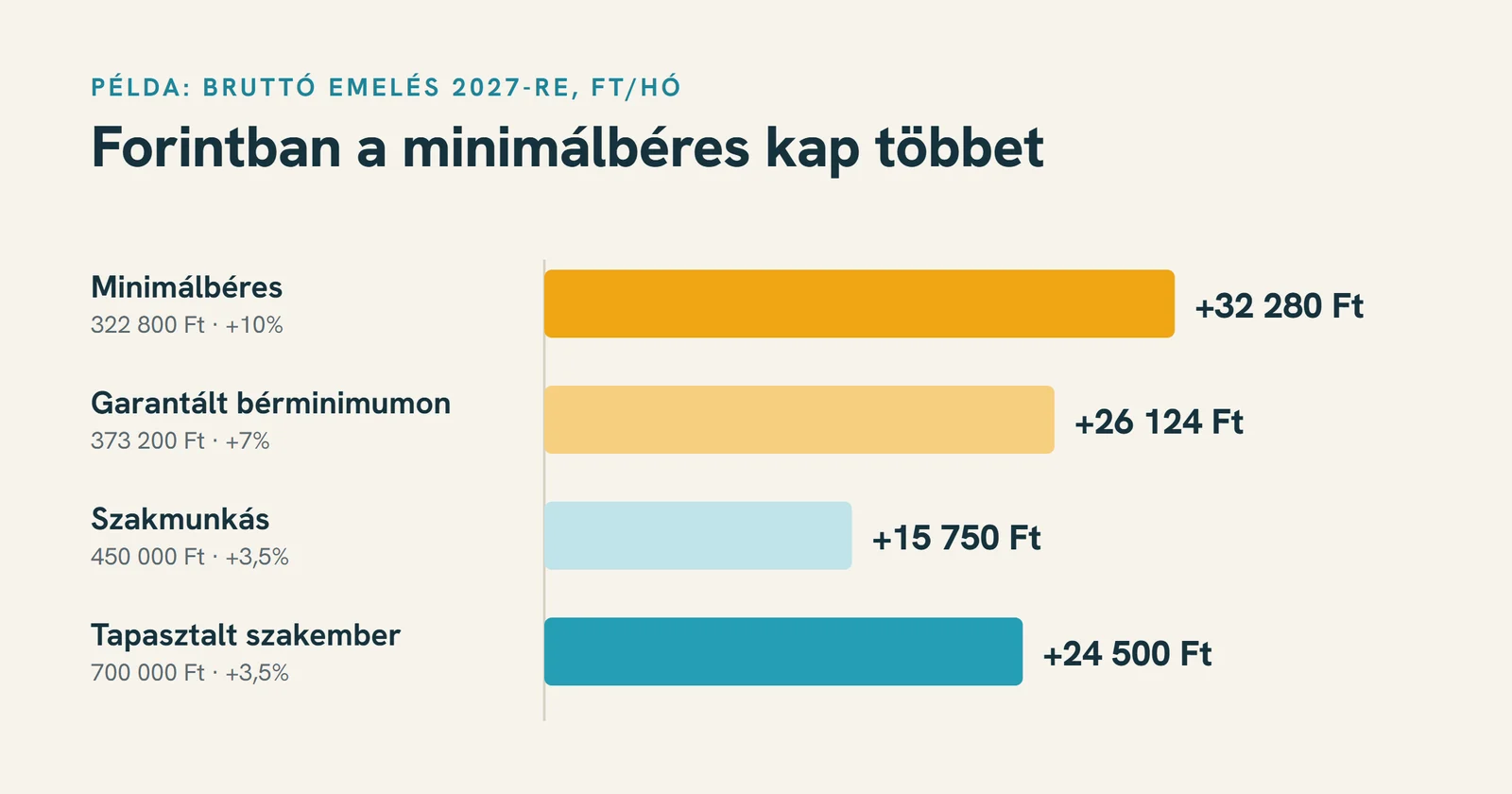
The 2027 pay rise budget has not been decided yet, but anyone who waits until December will be scrambling in January. What we know about the minimum wage and the guaranteed wage minimum, why the gap at the bottom of the pay scale is closing, what to watch in employer charges and pay transparency — and a checklist for the rest of the year.
Overtime, annual leave and sick leave: a quick guide
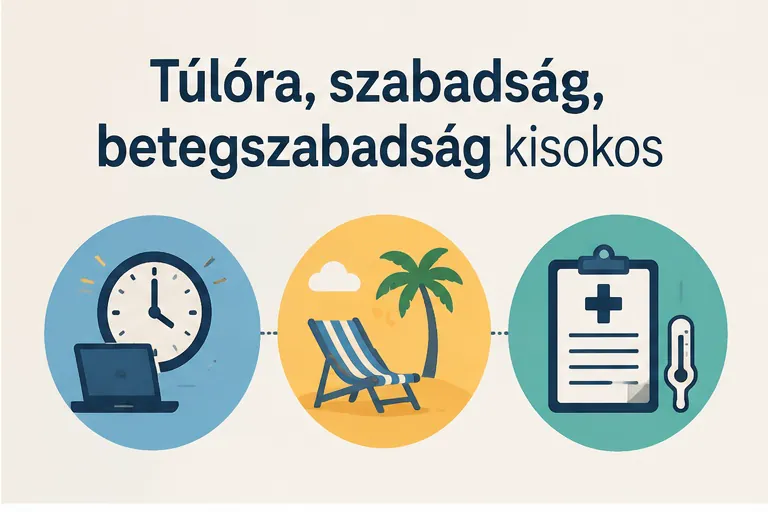
How much is overtime pay, and do you have to accept overtime? How many days of leave are you really entitled to, and is it lost if you do not take it? What is the difference between sick leave and sick pay? The three most misunderstood areas, explained.
Let’s talk about your payroll.
A few details about your company, and we get back to you within one working day: we learn about your current processes and prepare a tailored proposal. Or call us during office hours.