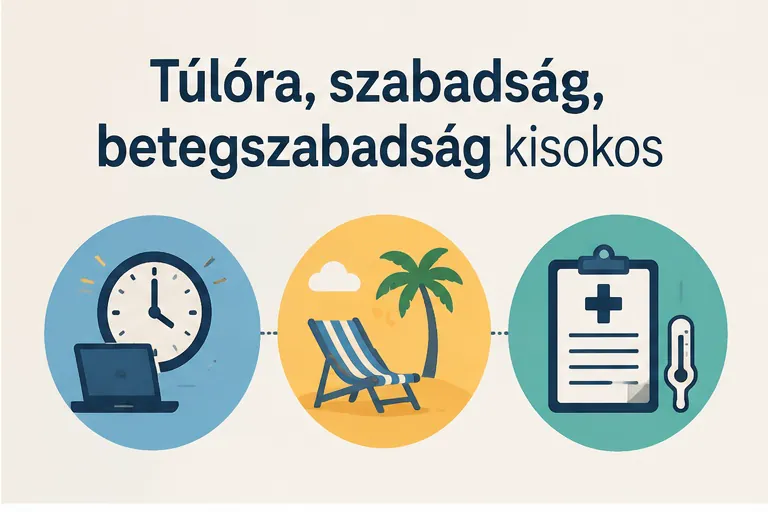
Most of us think we know our options and rights at work on the basic topics – and then, when it really matters, it turns out the area is full of myths. Let’s take a closer look at the three most frequently misunderstood areas: overtime, annual leave and sick leave.
Overtime: how much is due, and when is it compulsory?
How much extra pay is due?
For work beyond regular working hours (extraordinary working time), the basic rule is a 50% wage supplement on top of base pay, or the employer may grant time off instead if you agree to it. If the extraordinary working time falls on a weekly rest day or a public holiday, the supplement is, as a rule, 100%.

Is there an upper limit?
Yes. The annual cap on extraordinary working time is, as a rule, 250 hours, which a collective agreement may raise to 300 hours. In addition, your daily working time (including overtime) may not exceed 12 hours and your weekly working time 48 hours, and the law requires at least 8 hours of daily rest and at least 2 rest days per week. If you are regularly made to work more than this, it is definitely worth checking whether it is lawful.
Do you have to accept it?
As a rule, yes: the employer may order extraordinary working time, but there are limits. A pregnant woman, a parent of a small child (until the child turns 3) or an employee with reduced working capacity may only be scheduled for overtime with their consent.
What is worth checking?
- Does your payslip actually show the number of overtime hours and the supplement?
- Does the employer keep working-time records that you can access?
- If you are compensated with “time off”, do you actually receive it?
Annual leave: not just 20 days, and it is not “lost” if you do not use it
Basic and additional leave
Basic leave is 20 working days a year, to which age-based additional leave is added in steps:
| From age | Additional leave | Total (basic + additional) |
|---|---|---|
| Under 18 | +5 days | 25 days |
| 18–24 | – | 20 days |
| 25 | +1 day | 21 days |
| 28 | +2 days | 22 days |
| 31 | +3 days | 23 days |
| 33 | +4 days | 24 days |
| 35 | +5 days | 25 days |
| 37 | +6 days | 26 days |
| 39 | +7 days | 27 days |
| 41 | +8 days | 28 days |
| 43 | +9 days | 29 days |
| 45 and over | +10 days (maximum) | 30 days |
Additional leave is first due in the year in which the employee reaches the given age.
On top of this: +2 days for one child, +4 days for two children, +7 days for three or more children (for both parents, until the child turns 16) – many people do not know that both parents can claim it.
Who schedules the leave?
The timing of leave is essentially decided by the employer, but at least 7 working days a year must be granted at a time requested by the employee.
What if you cannot take it?
Leave must be granted in the year it is due, but in certain cases (e.g. an unavoidable interest of the employer, a reason on the employee’s side, or a probation-period “ban”) it can be carried over to the following year. Important: leave is not “lost” automatically. If the employer did not grant it in time, that is the employer’s responsibility, and during the employment it cannot be paid out in money, except when the employment ends.
Sick leave vs. sick pay: the two are not the same
These are often confused in everyday life, yet the difference is simple.
Sick leave (betegszabadság)
- 15 working days a year, paid by the employer.
- 70% of absence pay is due for this period.
- This must be used first when you fall ill – but it is only due for your own illness.
Sick pay (táppénz)
- It starts once the 15 days of sick leave are used up, and it is no longer paid solely by the employer but mostly by social security (with a one-third contribution from the employer).
- Its amount depends on the length of your insurance record: if you were insured for at least 730 days (2 years) in the previous two years, it is 60% of your average daily earnings; if for a shorter period, or if you are hospitalised, 50%.
- Sick pay also has a daily cap: in 2026 it is around HUF 21,500 (one thirtieth of twice the minimum wage), from which personal income tax is still deducted.
What many people do not know
- Sick leave and sick pay are not optional for the employer: if you are entitled, they cannot be refused.
- If your child is ill, you do not take sick leave but child-care sick pay – which is charged to social security from the first day.
- If your employer does not calculate sick leave correctly, or does not submit the certificate to NEAK (the national health insurance fund) in time, your payment may be delayed. If it drags on, it is worth asking.
What to do if you feel something is not lawful?
- Ask for your working-time records and payslips – you have the right to access them.
- Do the maths using the above to check whether what you receive is correct.
- If you find a discrepancy, first talk to your employer / HR: in most cases it is an administrative error, not a deliberate breach.
- If that leads nowhere, you can turn to the labour authority or a trade union, or a labour law adviser.
This article is for information only and does not constitute legal advice. In your individual situation it is always worth consulting a labour lawyer or the labour authority, as a collective agreement or individual employment contract terms may modify the general rules above. The article is based on the Labour Code (Act I of 2012) and the related rules in force in 2026.
More posts
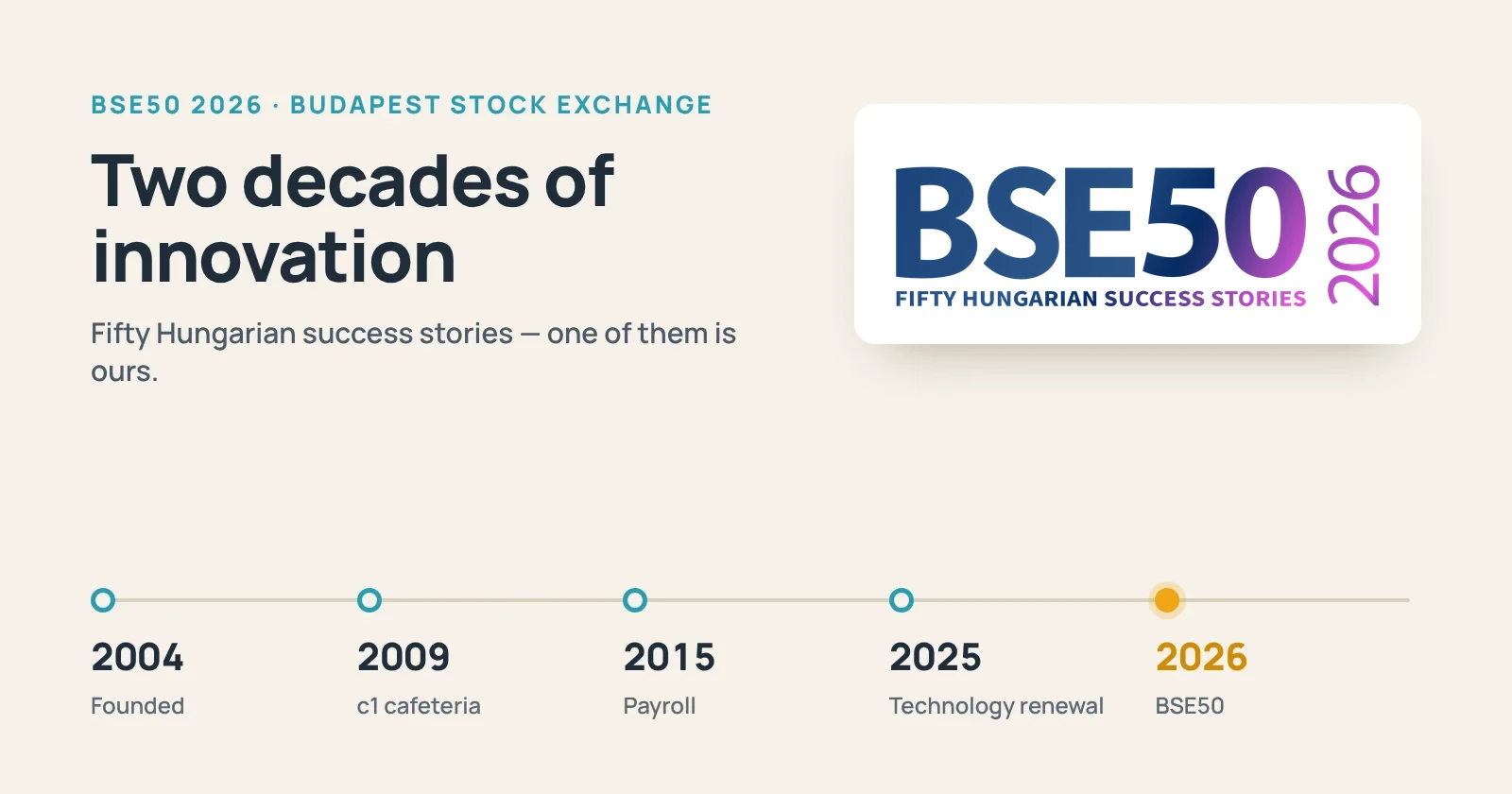
Codebase among the BSE50 2026 companies
The Budapest Stock Exchange has published BSE50 2026, its book on the success stories of fifty Hungarian companies. Codebase Kft., the company behind Codebase Payroll Services, is one of them. We are very proud of this recognition from the market.
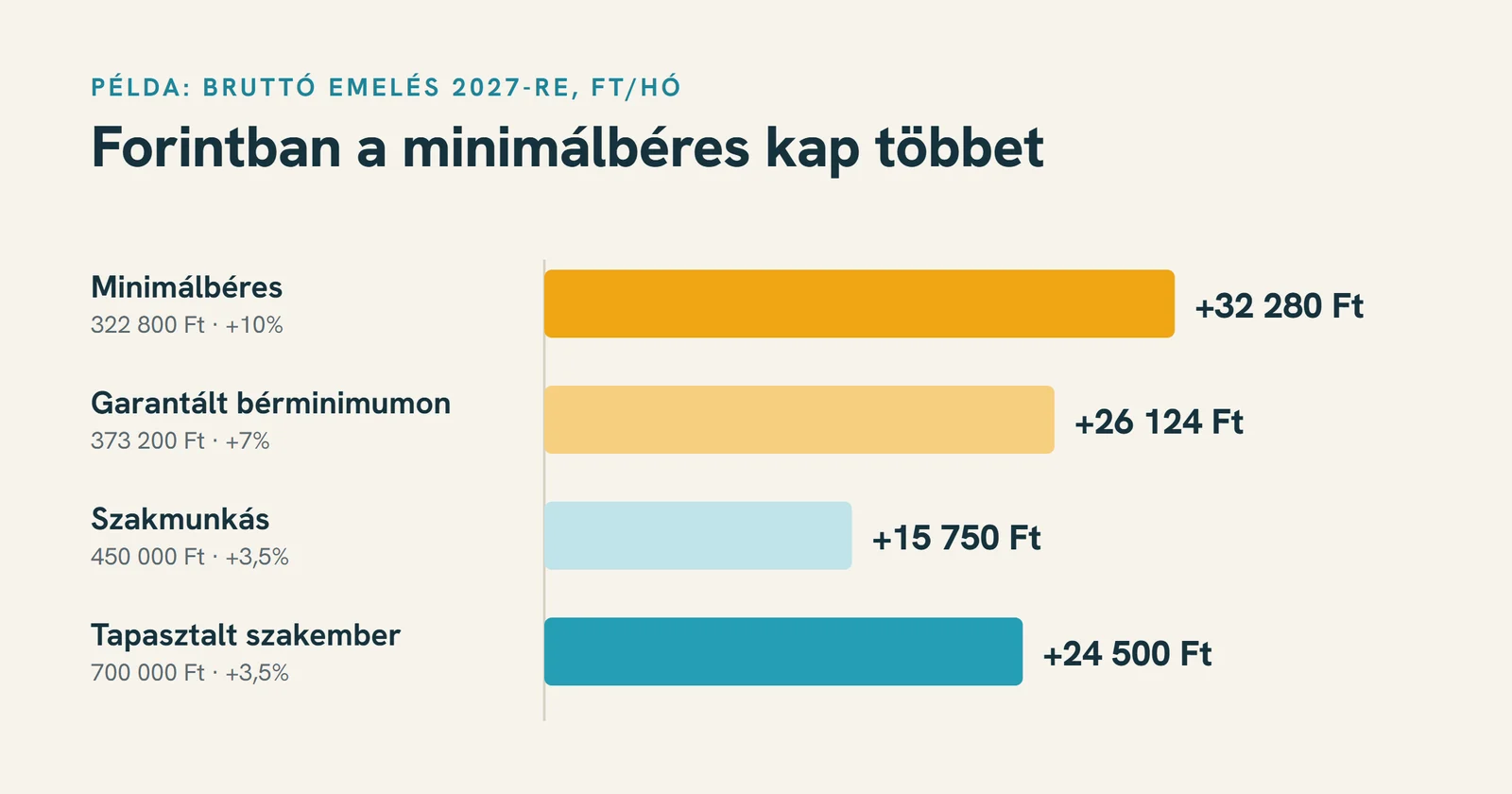
Pay planning for 2027: what should employers focus on now?
The 2027 pay rise budget has not been decided yet, but anyone who waits until December will be scrambling in January. What we know about the minimum wage and the guaranteed wage minimum, why the gap at the bottom of the pay scale is closing, what to watch in employer charges and pay transparency — and a checklist for the rest of the year.

Tax Benefits for mothers in 2026: Everything you need to know in one place
In 2026 the phased personal income tax exemption for mothers of two children began. Who is eligible, when it appears on the payslip, what income it covers, and what happens with part-time work, GYED, GYES or a change of job — in plain language, with examples.
Let’s talk about your payroll.
A few details about your company, and we get back to you within one working day: we learn about your current processes and prepare a tailored proposal. Or call us during office hours.